
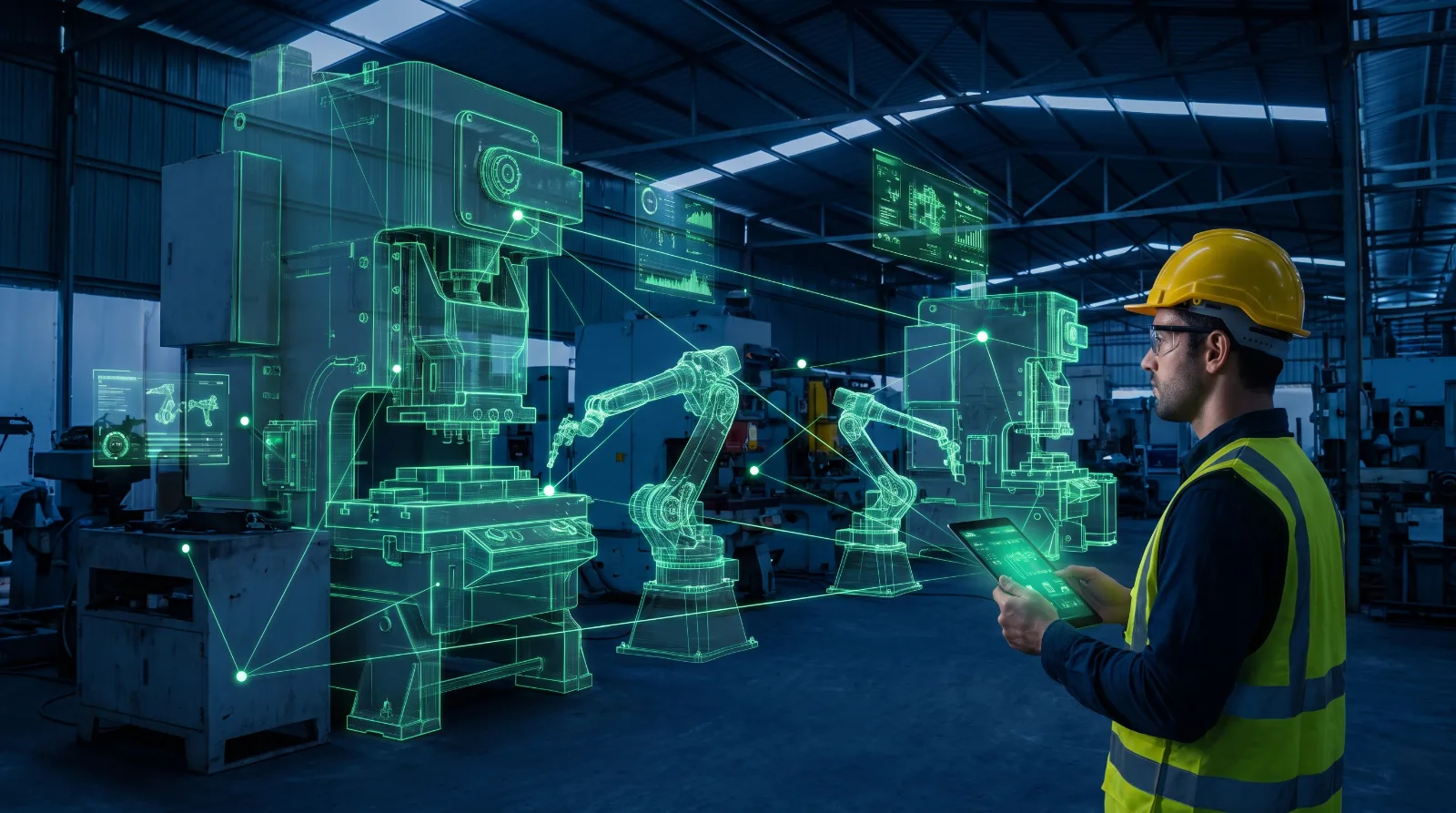
For years, "digital twin" often meant a detailed 3D model of a plant or machine. Useful for design reviews, but frozen at the moment it was built. In 2026 the term means something more demanding: a replica that is connected to the real asset and changes when the asset changes.
What is driving the shift
Three things have come together:
- Cheap sensors and connectivity. Most industrial equipment can now report temperature, pressure, vibration and throughput continuously.
- AI and analytics. Industry commentators such as RTInsights describe twins moving from static replicas to systems that analyse live data and predict what happens next.
- Market demand in India. Ken Research estimates the India digital twin market at about USD 1,020 million in 2026, growing at over 33% a year to 2031, driven by manufacturing and Industry 4.0 programmes (Ken Research).
Three levels of twin
It helps to think in levels:
- Descriptive twin. An accurate 3D model. Good for layout planning and training, but it does not know what the real asset is doing.
- Live twin. The model is fed by real sensor data, so operators see temperature, pressure and wear exactly where they occur, in real time.
- Predictive twin. Analytics run on that live data to flag problems early and test what-if scenarios before changing anything on the floor.
Most value sits in levels two and three. A model that does not know what the machine is doing cannot warn you about it.
What makes a live twin work
- Connect to what you already have. Replacing sensors is expensive and slow. A good platform reads existing IoT hardware.
- Keep it to scale. Operators need to trust that the twin matches the plant exactly.
- Put data where it happens. A value on a dashboard is harder to act on than the same value shown on the machine it comes from.
- Decide where data lives. Many plants want the twin to run on-premise so production data stays in the facility.
How Maquette-XR fits
Maquette-XR is our live digital twin platform. It builds to-scale 3D replicas, connects to existing IoT hardware, and streams 150+ live parameters into the twin, so teams can monitor production, run what-if scenarios, plan predictive maintenance and train operators inside the live model.
Want to see your own facility as a live twin? Book a demonstration and bring your floor plan.