
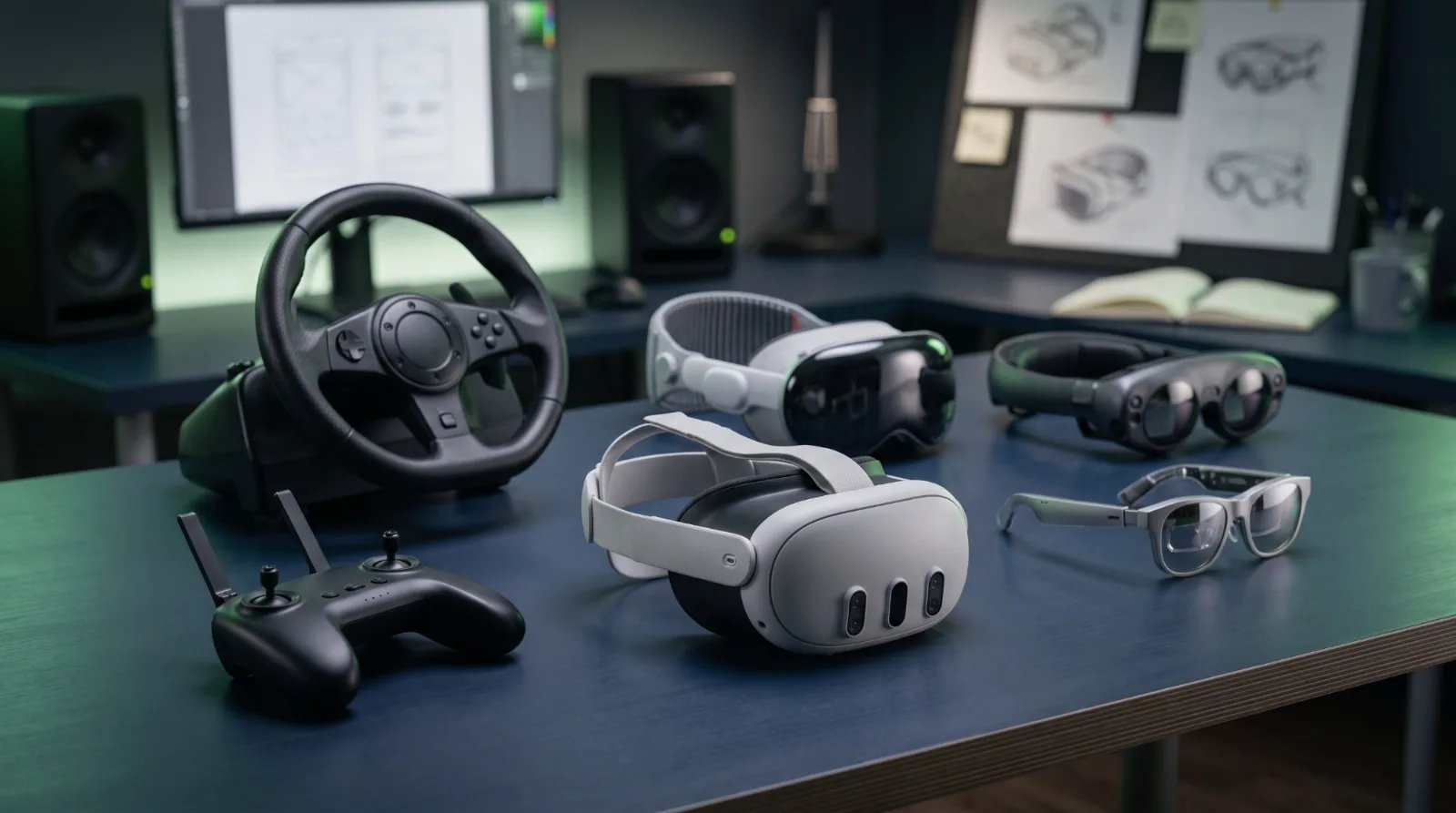
The enterprise XR market in 2026 has more serious hardware than ever. Samsung's Galaxy XR runs Google's Android XR platform, Meta's Quest 3 line is widely deployed, Apple Vision Pro sits at the high end, and optical see-through devices such as HoloLens 2 and Magic Leap 2 remain in industrial use. Choosing between them is harder than it looks.
Start with governance, not specs
Industry coverage such as UC Today notes that enterprises now begin XR evaluations with governance questions rather than headset comparisons. That is the right order. Before comparing resolution and field of view, answer:
- Where does data go? Does the device need a cloud account? Can it run offline?
- Who manages the devices? Is there enterprise device management, and does it fit your IT policies?
- What happens in a secure facility? Many defence and industrial sites do not allow devices that connect to outside networks.
- How long will it be supported? Training programmes run for years. Hardware that is discontinued in 18 months is a problem.
Match the device to the task
- Full immersion (VR) suits simulation training, where the trainee should see only the virtual world: driving, flying, emergency drills.
- Passthrough mixed reality suits training that mixes real objects and virtual content, such as assembly guidance.
- Optical see-through AR suits work on site, where the user must see the real world clearly: construction checks, maintenance.
- Tablets and phones are still the simplest AR device for many site teams, with no headset training needed.
Hardware is the smaller part of the cost
Headsets are usually a small share of total cost. Content, integration with real controls, instructor tools, reporting and support make up the rest. It is often better to choose a platform whose software can move to new headsets as they appear than to optimise for one device.
Real controls matter more than the headset
For skills training, what the hands and feet do is often more important than what the eyes see. Our VRMMDS driving simulator pairs the headset with a Logitech G29 wheel, pedals and force feedback, and VRMDFS uses a custom RC controller. The skill is built in the controls, and it transfers to the real vehicle.
Questions for any XR vendor
- Which headsets does the software support today, and how do you handle new ones?
- Can it run air-gapped and on-premise?
- What reporting do instructors get?
- What does support look like after installation?
Planning an XR training programme? Talk to our engineers before you buy hardware.