
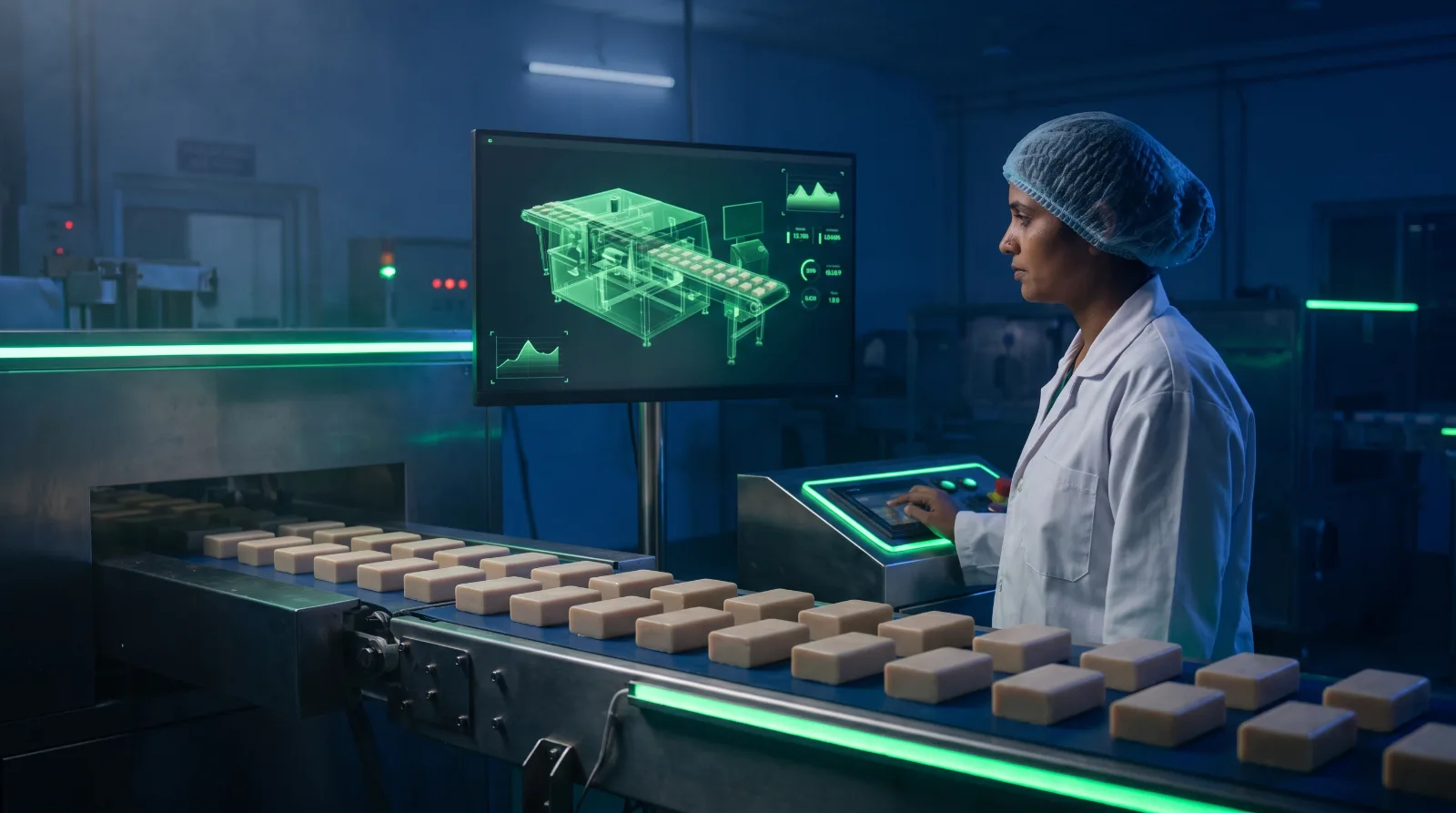
On 16 June 2026, Unilever and Accenture announced plans to roll out more than 40 new digital twins across Unilever's manufacturing network over 18 months. One of the results they highlighted came from India: at Gandhidham, one of Unilever's largest personal care sites in South Asia, a digital twin helped reduce quality defects in Dove soap bars by 30% over four years, through real-time control recommendations, according to Unilever.
For Indian manufacturers, it is a useful proof point: a digital twin on an Indian line, producing a measurable quality result.
Five lessons worth taking
1. Start with a measurable problem. The Gandhidham result is about quality defects, a number the plant already tracked. Pick a metric you already measure: defects, downtime, energy or yield.
2. Expect results over time. The 30% reduction came over four years. Twins improve as they collect data and as teams learn to act on them.
3. Real-time recommendations matter. The value came from guiding operators while the line runs, not from monthly reports.
4. Prove it on one line, then scale. Unilever is now rolling twins out widely because the early sites showed results.
5. The model is only as good as the data. A twin needs reliable, live sensor data from the equipment it represents.
A starting plan for an Indian plant
- Choose one line or asset and one metric.
- List the sensors you already have before buying new ones.
- Build the twin to scale and connect live data.
- Put readings where operators can act on them.
- Measure against the months before, then decide whether to scale.
How Maquette-XR fits
Maquette-XR builds to-scale 3D twins, connects to your existing IoT hardware and sensors, and streams 150+ live parameters into the model, so operators see temperature, pressure, wear and throughput where they occur. Teams can run what-if scenarios before changing anything on the floor, and it can run on-premise.
Read more about digital twins for manufacturing, or book a technical call to scope a twin for one of your lines.