
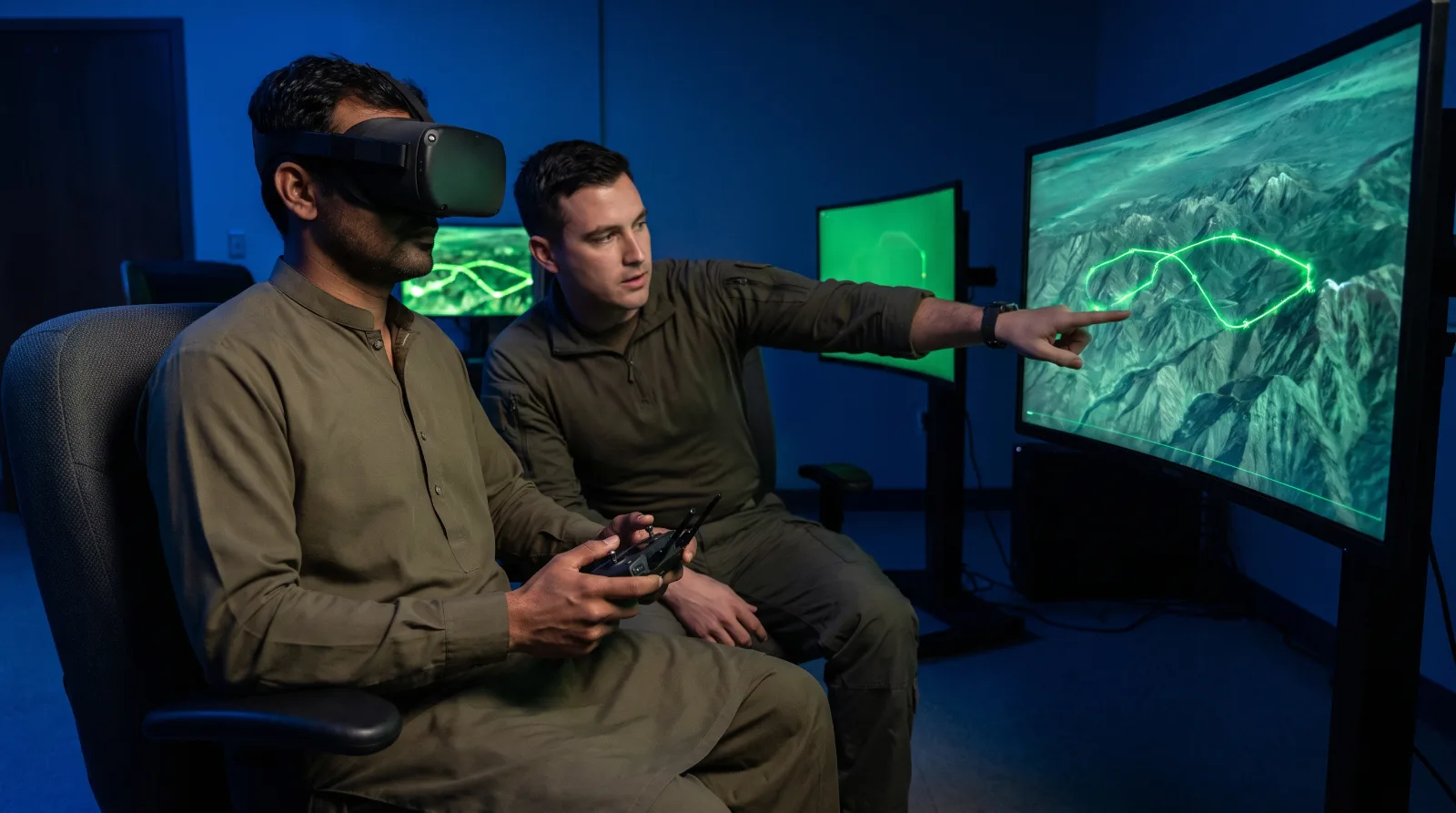
How much simulator time should a military drone pilot log before touching a real aircraft? In September 2026 the British Army gave one clear answer. According to DroneXL, Lt. Col. Matt Keogh told a UK defence exhibition that trainees need 30 hours of simulator time before starting a two-week operator course. The Army bought over 10,000 drones in a year under Project Rapstone, and the programme puts pilot training ahead of buying the newest models, because hardware goes out of date in weeks or months.
Why a fixed number of hours helps
A minimum simulator requirement does three things:
- It protects airframes. The first crashes happen in software, not in the air.
- It levels the intake. Everyone arrives at the live course with the same basic control skills, so instructors spend live hours on what only live flying can teach.
- It makes planning possible. Hours per pilot multiplied by pilots per unit tells you how many simulator stations you need.
What those hours should contain
Thirty hours of aimless flying teaches little. A useful syllabus builds step by step:
- Basic control: hover, climb, turn and land, until they are automatic.
- Aircraft types: multirotor and fixed-wing handle very differently.
- Terrain and weather: mountains, built-up areas, wind and poor visibility.
- Degraded conditions: the British programme deliberately strips flight aids and GPS so pilots cannot lean on automation.
- Assessment: scored sessions, so the pilot moves on when ready, not when the hours run out.
Setting your own number
The right number depends on the aircraft, the mission and the trainee's background. A practical way to set it:
- Start with a target, such as 30 hours, and a clear standard for passing.
- Record each trainee's scores and how they then perform in live flying.
- Adjust the hours up or down based on the results, not on habit.
Where VRMDFS fits
Our VRMDFS drone flying simulator supports this kind of syllabus: seven drone types from fixed-wing to hexacopter and cargo, ten terrains including glaciated, high-altitude and built-up areas, all-weather scenarios, three difficulty modes, a custom RC controller and multiplayer sessions for five or more pilots. Every session produces a performance report, so the hours become a record of skill rather than time in a seat.
Planning a drone training programme? Talk to our defence team or see our defence training systems.