
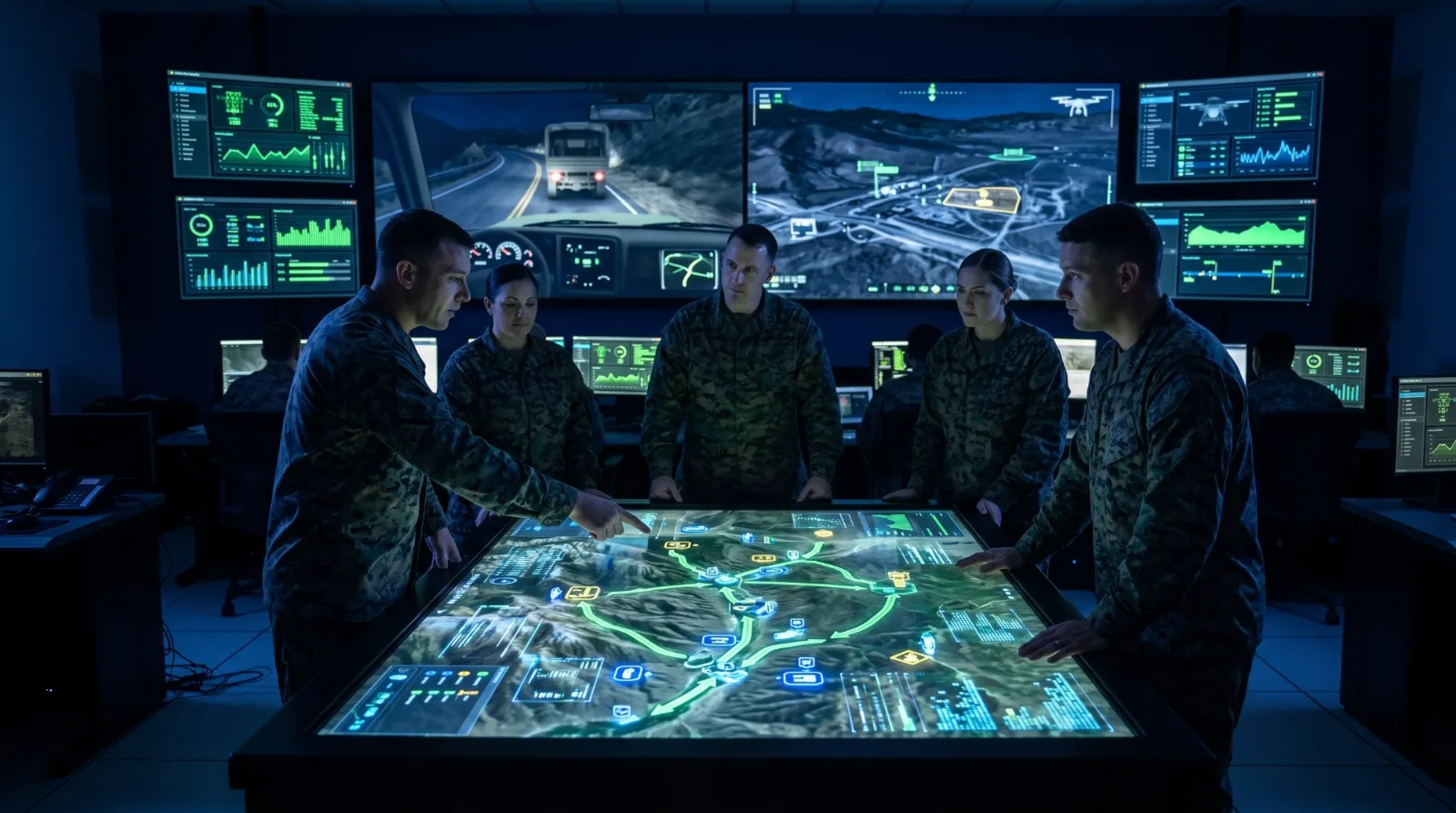
Live, virtual, constructive (LVC) training is now appearing in Indian defence programmes, including the Army's Combat Training Network. The term sounds abstract, but the idea is simple.
The three parts
- Live: real people using real equipment in the real world. A section on a firing range, a convoy on an actual road.
- Virtual: real people using simulated equipment. A driver in a driving simulator, a pilot in a flight simulator, a commander in a virtual command post.
- Constructive: simulated people using simulated equipment, driven by computer. Enemy forces, friendly units on the flank, civilian traffic.
LVC means connecting all three so they take part in the same exercise at the same time.
Why connect them
A live exercise is expensive and limited by how many troops, vehicles and ranges can be brought together. Simulators on their own train individuals well but miss the team and command layer. Constructive forces fill the battlefield without extra people.
Put together, a small live force can train against a large, realistic scenario. A convoy driver in a simulator can be part of the same exercise as a unit on the ground, while the commander watches the whole picture.
What makes LVC hard
- Shared picture. Every participant must see the same situation at the same time, with no lag between them.
- Common data. Terrain, positions and events have to be described in the same way across different systems.
- Networking in the field. Training sites are often remote, so systems must cope with limited connectivity or run on local networks.
- After-action review. The value of an exercise is in the debrief, so everything needs to be recorded and replayed.
Where shared virtual environments fit
A shared virtual environment is the virtual layer that lets people in different places work in one scene. Our Sky-XR platform is built for that: a virtual command centre where participants see the same models, telemetry and updates in real time, for command exercises, incident management and design reviews. Combined with individual trainers such as the VRMMDS driving simulator and VRMDFS drone simulator, it covers the virtual side of an LVC setup.
Start small
LVC does not have to begin as a single large programme. Many organisations start by linking two or three simulators in one hall, then add constructive forces and a shared command view. The key is choosing systems that are built to connect.
Ask us how the pieces could fit together for your training needs.