Unplanned downtime is one of the most expensive events in a plant. Predictive maintenance aims to fix equipment just before it fails, not after, and not on a fixed schedule that replaces parts that still had life in them. A live digital twin is one of the most practical ways to get there.
Why a twin helps
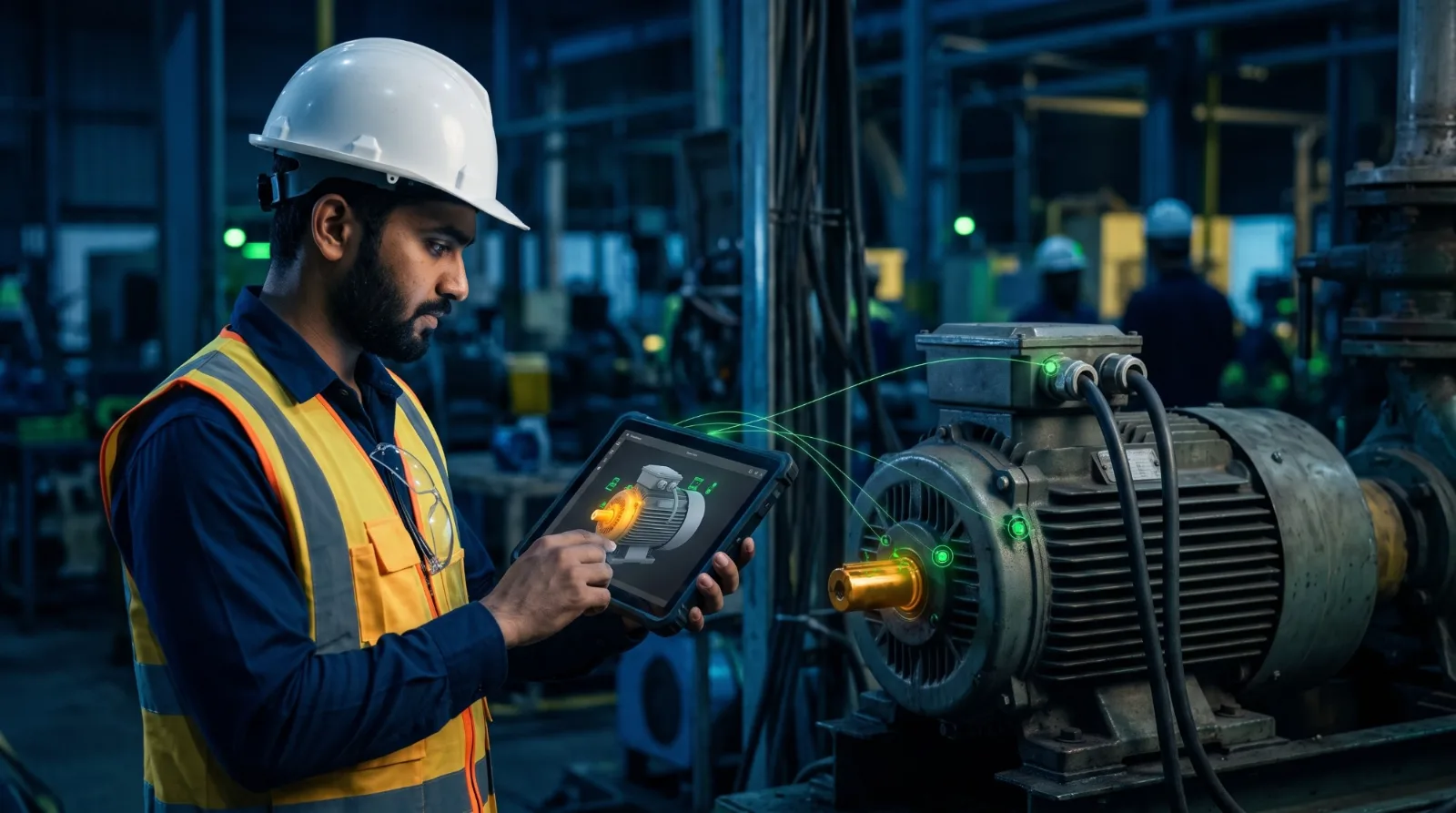
Sensor data on its own is a stream of numbers. A twin places those numbers on a precise model of the equipment, so a rising bearing temperature appears on the bearing itself, next to the vibration reading from the same shaft. Patterns that are hard to spot in a spreadsheet become visible to the people who run the machine.
A practical way to start
- Pick one critical asset. Choose equipment whose failure stops production and whose repair is expensive. One line, one compressor, one kiln.
- List what you already measure. Most plants have more sensors than they use. Start with the data you have before buying new hardware.
- Agree what failure looks like. Work with maintenance staff to list the failure modes that matter and the early signs of each.
- Build the twin to scale and connect the live data.
- Set simple thresholds first. Rules such as "vibration above this level for more than ten minutes" catch many problems. Add analytics once there is enough history.
- Measure the result. Track downtime, repair costs and false alarms against the months before the twin.
- Scale to the next asset once the first one proves its value.
Common mistakes
- Starting with the whole plant. Big projects stall. Small ones prove value quickly.
- Replacing working sensors before using the data they already produce.
- Leaving out the operators. The people on the floor know which noises and smells come before a failure. Their knowledge should shape the alerts.
- Too many alarms. If every alert is urgent, none of them is.
Where Maquette-XR fits
Maquette-XR connects to existing IoT hardware and streams 150+ live parameters into a to-scale twin. Teams can see temperature, pressure, wear and throughput where they occur, and run what-if scenarios before committing capital or downtime. It can run on-premise, with edge computing keeping latency low on-site.
Ready to pick your first asset? Talk to our team about a pilot.