
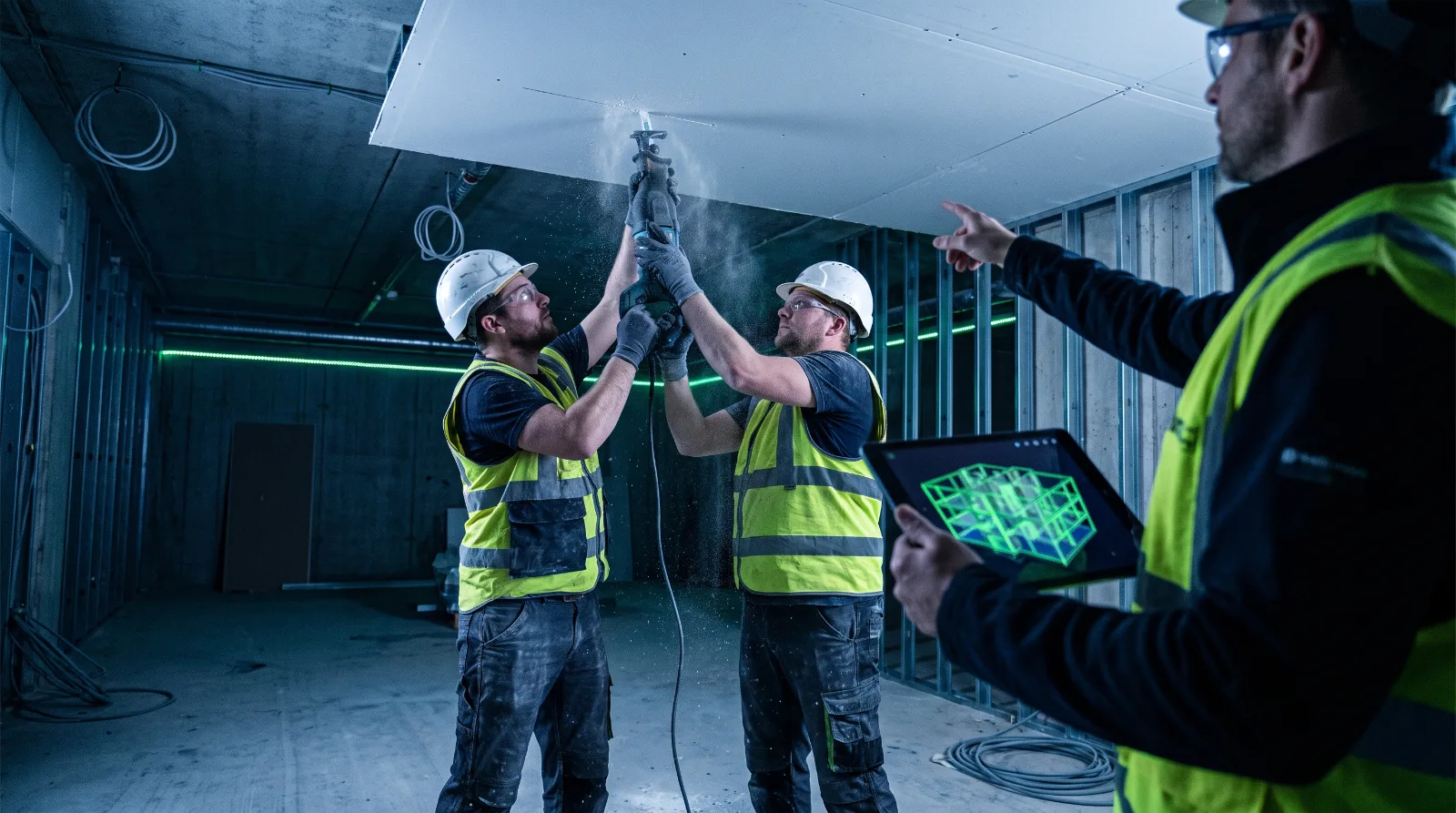
Rework is one of those construction costs everyone knows exists and few measure well. A study by Peter E. D. Love, published by ASCE in January 2026, used actual field data from a contractor's projects and found that rework costs, excluding those that surfaced after completion, were under-reported by 300%.
In that study, rework before completion averaged 0.38% of contract value. Including corrections after completion, the average was 0.76%, and on some projects it reached 7.34%. The study notes that while these figures are smaller than some estimates, rework still significantly erodes contractors' profit margins.
Why rework is bigger than it looks
- It is under-reported. Crews fix problems quietly, and the cost disappears into labour and materials.
- Late fixes cost most. Once the next trade has built over an error, fixing it means undoing their work too.
- It hits schedules, not just budgets, and delays can cost more than the rework itself.
The main sources the study points to are familiar: design errors, client changes, material defects and other changes.
Catch it earlier
The cheapest rework is the one caught before anything else is built on top of it. That means checking the work against the design at the right moments:
- Before concealment: before ceilings close, walls are boarded or concrete is poured over services.
- At trade handovers: before the next trade starts.
- After design changes: to confirm the site reflects the latest model.
How AR helps
Comparing a drawing with a half-built floor is slow and error-prone. Augmented reality overlays the 3D BIM model directly on the site, so a team can see immediately where a duct, opening or column departs from the design.
MOE AR does exactly this: it overlays the BIM model on the physical job site so architects, engineers and project managers can catch disparities and clashes before they turn into rework, and review them with every stakeholder on site.
Want to see what AR finds on your project? Read about AR for construction or bring us your BIM model.