
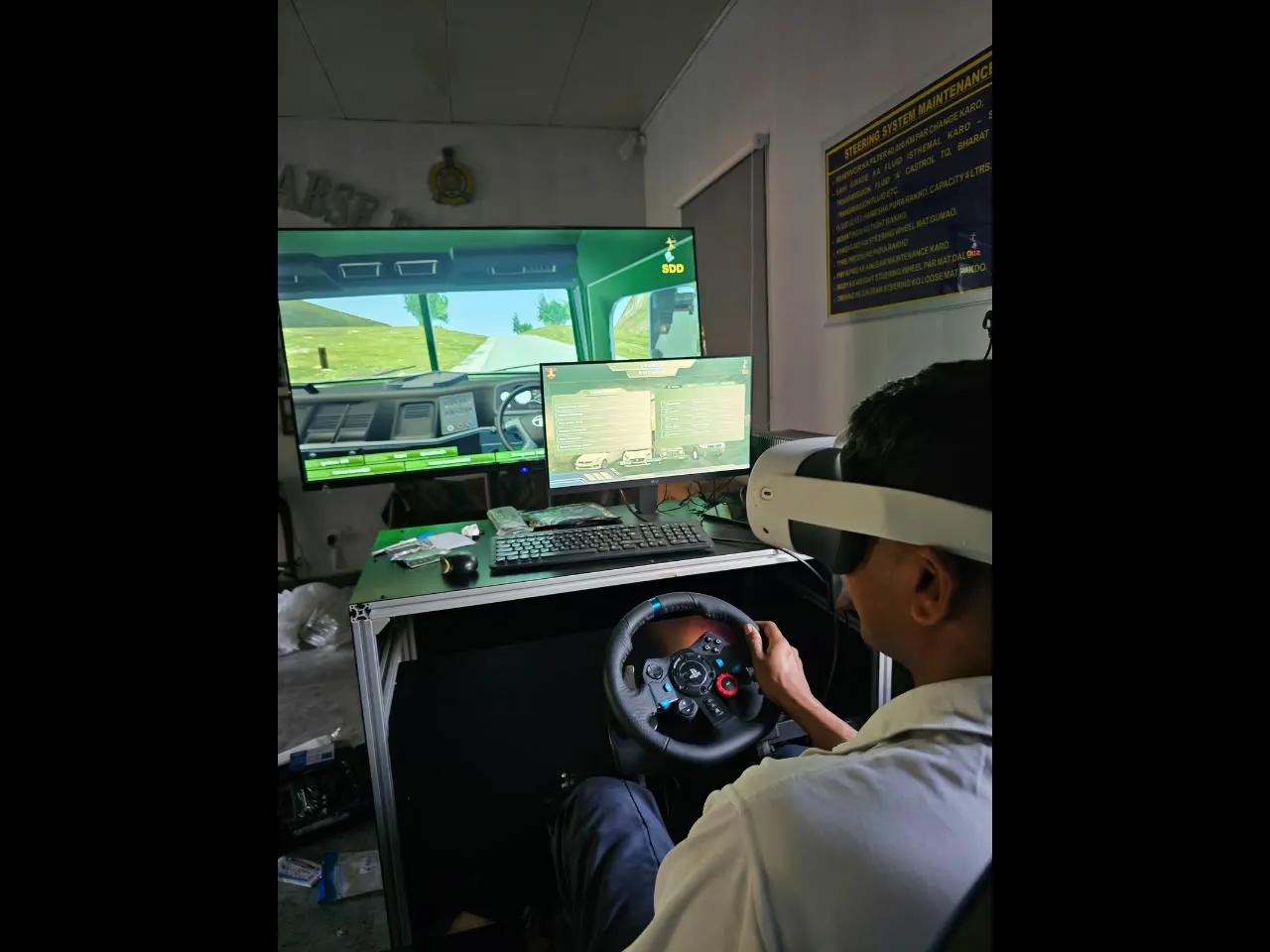
India's rules for Accredited Driver Training Centres (ADTCs), inserted into the Central Motor Vehicles Rules as rules 31B to 31J from 1 July 2021, require these centres to be equipped with simulators and a dedicated driving test track. Candidates who pass at an accredited centre are exempted from the driving test when they apply for a licence, as The Tribune reported when the rules were notified.
That makes the simulator a core piece of equipment for any centre seeking accreditation. Prices on the market vary enormously. Here is what actually drives the difference, so you can compare quotes properly.
1. Display: screens or headset
Single-screen, three-screen and curved-projection systems, and VR headsets, all exist. More screens mean more hardware and more space. VR gives full surround vision in a smaller footprint, but trainees need a short adjustment period.
2. Controls and cabin
The biggest difference in training value. A real steering wheel with force feedback, real pedals, a gear lever and a proper seat build habits that transfer to the road. Full vehicle cabins cost more again. Avoid anything that feels like a game controller.
3. Motion
Motion platforms (3 or 6 degrees of freedom) add the feeling of braking and cornering, and add significant cost and maintenance. Many centres get strong results without motion by focusing on controls, scenarios and assessment.
4. Vehicle classes
A system that covers both light and heavy vehicles on one rig can serve more licence classes with less hardware. Check how each vehicle's handling is modelled.
5. Scenarios and instructor tools
Look for varied terrain, weather and night driving, and for the ability to trigger faults and hazards during a session. This is where a simulator teaches things a test track cannot.
6. Assessment and reports
Automatic scoring and logged reports make assessment consistent across instructors, and give you a record for every candidate.
7. Support over the years
Ask about warranty, annual maintenance, spare parts for wheels and pedals, software updates and how quickly an engineer can reach you. A cheaper system with poor support costs more over five years.
Questions to ask every vendor
- Can I drive it myself before buying?
- Which vehicles and terrains are included, by name?
- What does a trainee report look like?
- What floor space and power does each station need?
- What is covered after the first year, and at what cost?
How VRMMDS compares
Our VRMMDS simulator was built for the Indian Army's driver training: four light and four heavy vehicle types, seven terrains with rain, fog and night, a Logitech G29 steering wheel with force feedback and real pedals, instructor fault injection and automated scored reports. The rigs are portable and it saves Rs 19 lakh per unit compared with live-vehicle training.
Setting up or upgrading a driver training centre? See driver training for fleets and institutes, or request a demonstration.